
What a Kitchen Remodel Really Costs in Horry County: Budget Breakdown
Trend articles have a credibility problem, and it is worth naming before getting into one.
Most are written by people who do not sell kitchens, assembled from other trend articles, and they describe a fashion cycle rather than what anyone is actually building. The result is a list of things nobody has ordered.
What follows is different in one specific way: it comes from selections. At The Cabinet Market we watch what people choose in the showroom and what ends up on orders, and the shifts we are seeing heading into 2027 are consistent enough to be worth writing down.
These are observations and reasoned expectations, not survey findings. Read them as informed opinion from people who quote kitchens for a living.
1. Warm Woods and Stained Finishes Return
The clearest movement of the past two years, and it is accelerating.
For roughly a decade, painted cabinetry dominated so completely that stained wood read as dated, a hangover from the honey oak era nobody wanted to revisit. That association has finally worn off, and wood is returning on quite different terms.
What is coming back is not the old orange-toned oak. It is white oak, walnut and rift-cut grain, in finishes that show the wood rather than colouring it. Matte and satin sheens rather than gloss. Grain used deliberately, as texture and pattern.
The most common form we see is mixed rather than wholesale: a stained island against painted perimeter cabinetry, or wood on tall units with painted bases. That hedges the commitment, which is sensible, and it looks considered rather than themed.
Why it is happening is not complicated. A decade of white and grey produced rooms that were clean and slightly cold, and people are correcting toward warmth. Whether that correction overshoots by 2029 is a fair question. Right now it looks like a genuine return rather than a fashion spike, largely because wood has a longer history in kitchens than any painted colour does.
Our guide to wood species for kitchen cabinetry covers how each behaves in practice, which matters here because the grain you like in a photograph has to survive a coastal climate.
2. The All-White Kitchen Becomes a Choice, Not a Default
The all-white kitchen is not dying. It is losing its status as the automatic answer, which is a different and more interesting thing.
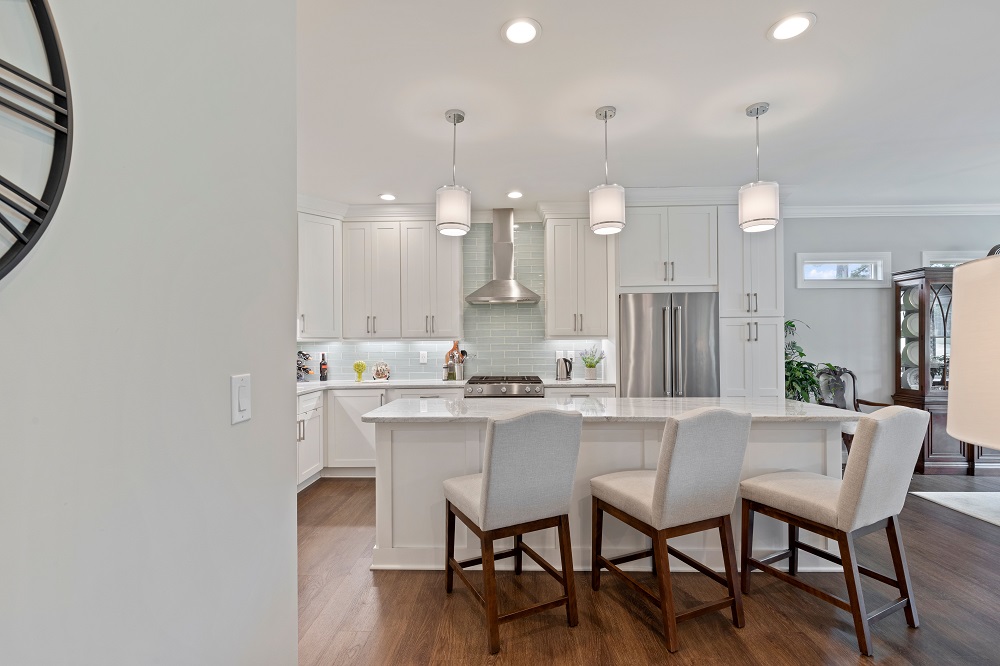
For years white was what you chose when you did not want to choose: safe, bright, universally acceptable, defensible at resale. That default is dissolving, and colour is re-entering through the least risky door: the island.
Two-tone kitchens, where the island carries a colour the perimeter does not, have become normal rather than adventurous. The colours doing well are muted and grounded: deep greens, navies, warm greys, soft clay tones. Not bold, exactly. Confident.
For coastal homes specifically, this is a welcome development, because a genuinely all-white kitchen in a house full of reflected water light can read cold. A warmer or deeper island anchors the room.
The practical advice remains what it has been: choose colour where it is easiest to change. An island can be repainted or refinished. Perimeter cabinetry throughout a large kitchen is a much larger commitment. Our overview of cabinet colour trends for coastal kitchens goes further into which tones hold up in this light.
3. Texture Moves to the Countertop
Polished surfaces are giving ground to honed, leathered, matte and lightly textured finishes, and this is one of the shifts we would bet on continuing.
Honed and leathered surfaces do three things well. They diffuse light rather than bouncing it, which makes a room feel calmer. They hide fingerprints and water spotting far better than polish. And they pair naturally with the warm woods described above: matte with matte, texture with texture.
There is a genuine trade-off worth knowing. On some materials, a honed finish is slightly more prone to showing marks from oils and acidic liquids than a polished one, because the surface is more open. On quartz this is largely a non-issue. On natural stone it is worth asking about specifically for the exact slab you are considering.
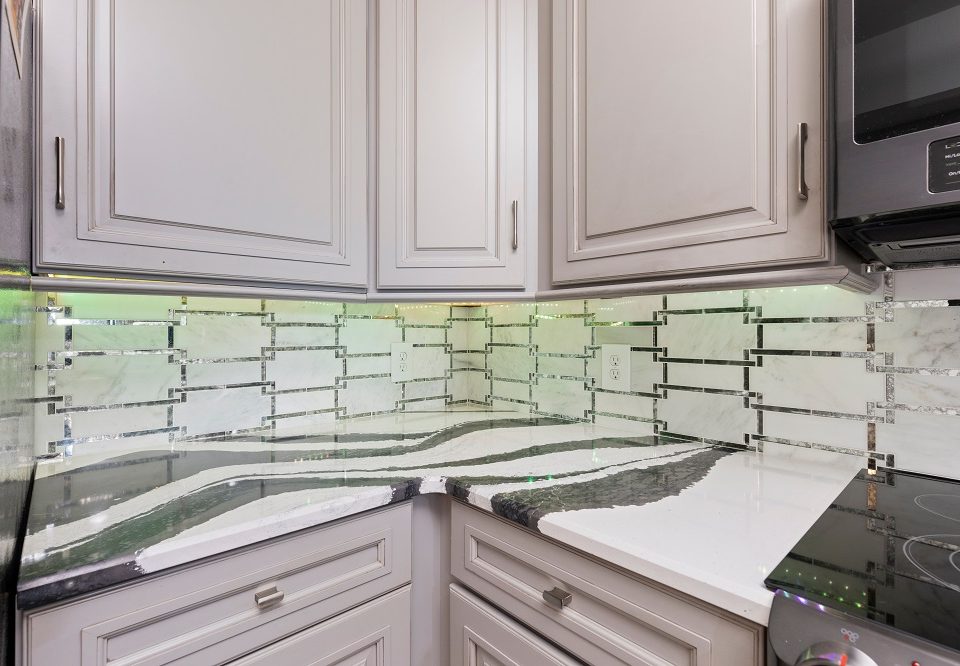
The pattern movement is also shifting, away from dramatic high-contrast veining toward quieter, more subtle patterns. The very bold marble-look slabs of recent years are the thing most likely to date a kitchen built in 2024. Our overview of countertop materials covers how each finish performs day to day.
4. Appliances Disappear Into the Cabinetry
Integrated and panel-ready appliances have been available for a long time and expensive for just as long. What is changing is that they are appearing in ordinary kitchens rather than only in high-end ones.
Panel-ready refrigerators and dishwashers, with cabinet fronts matching the surrounding doors, produce a kitchen that reads as furniture rather than as an appliance showroom. In an open-plan home, which describes most newer Grand Strand construction, that matters, because the kitchen is visible from the living space constantly.
Two practical realities before committing. First, panel-ready appliances cost more, and the panels themselves are cabinetry, so they are an additional line item rather than an included one. Second, appliance dimensions have to be confirmed before cabinets are ordered, and integration makes that far less forgiving: a standard appliance can usually be swapped for another standard appliance, but an integrated one is built into the run.
5. The Range Hood Becomes the Focal Point
If cabinetry is going quieter and appliances are disappearing, something has to carry the room. Increasingly it is the hood.
Plaster, wood-clad, and metal statement hoods are moving from designer projects into ordinary ones. Some are architectural and sculptural; others are simple shapes in a material that contrasts with the cabinetry. Either way, the hood is being treated as the room’s one deliberate gesture.
The practical note that gets skipped: a statement hood is a ventilation appliance first. Sizing, duct routing and make-up air all still apply, and a beautiful hood that under-ventilates is a daily annoyance in a room where you cook. Decide the ventilation performance first, then design the enclosure around it, not the other way round.
6. Storage Gets Specified, Not Assumed
Less visually exciting than the rest of this list and probably the most consequential.
Interior storage is moving from an afterthought to a specification. Deep drawers instead of base cabinets with doors. Pull-outs as standard rather than as an upgrade. Dedicated space for specific things (spices, trays, small appliances, waste and recycling) designed in rather than improvised afterward.
This is the trend with the largest gap between how it photographs and how much it matters. Nobody chooses a kitchen because of a drawer divider. But of everything on this list, interior storage is what people mention two years later when asked what they are most glad they did.
As the exclusive Wellborn dealer we work with a very large range of storage accessories, and the shift we have seen is real: these are increasingly specified at design stage rather than added as a late upgrade.
What This Means Specifically for Coastal Homes
Three of these trends interact with coastal conditions in ways worth flagging.
Warm woods and humidity. Wood moves with moisture, and a coastal home, particularly one that sits empty for stretches with reduced air conditioning, puts more stress on it than an inland one. This does not rule out stained wood cabinetry. It does mean construction quality matters more, and it is worth reading our guide to cabinets for humid coastal climates before committing to a species and finish.
Matte finishes and salt. Matte and textured surfaces are more forgiving of water spotting, which is a genuine advantage in a house with hard water or salt air. They can be slightly more prone to holding residue in the texture, so they want cleaning with the right products rather than aggressive ones.
Color and coastal light. Reflected light off sand and water is bright, and it shifts color perception more than most people expect. A greige that looks warm inland can read green here. Always view samples in the actual room, at the time of day you use it most.
Which of These Are Worth Committing To
An honest sorting, because not every trend deserves equal confidence.
Safe to commit to:
- Interior storage. Never goes out of style, improves daily life, and costs more to retrofit later.
- Honed and matte surfaces. Practical benefits independent of fashion.
- Better cabinet construction. Not a trend at all, and the thing you will be gladdest about.
Reasonable, with a hedge:
- Warm woods, especially mixed with painted cabinetry rather than wholesale.
- Coloured islands. Contained, and changeable if tastes move.
Enjoy, but understand the commitment:
- Statement hoods. Highly visible and expensive to change. Choose one you would still like if it were not fashionable.
- Integrated appliances. Locked into the cabinetry once built.
The most durable advice, which is not a trend: the kitchens that still look good after ten years are the ones where the layout works, the construction is sound, and the fashionable element was contained to something changeable. That has been true through every trend cycle we have worked through, and it will be true in 2027.
If you would like to see any of this in person rather than in photographs, that is what the showroom is for: finishes, door styles and countertop samples all read very differently in the hand than on a screen. Have a look at recent projects in our portfolio or start planning a kitchen remodel for the year ahead.
Frequently Asked Questions
Are white kitchens going out of style in 2027?
Not going out of style, but no longer the automatic default. White remains a strong, bright and resale-friendly choice. What is changing is that colour and wood tones are re-entering as considered options rather than risks, most commonly on the island, where the commitment is contained.
What kitchen cabinet colors are trending for 2027?
Muted, grounded tones (deep greens, navies, warm greys and soft clay shades) most often on an island against a lighter perimeter. Alongside that, stained white oak and walnut are returning after a long period of painted dominance.
Is stained wood cabinetry coming back?
Yes, though not in its previous form. The return is white oak, walnut and rift-cut grain in matte and satin finishes that show the wood rather than colouring it, frequently mixed with painted cabinetry rather than used throughout.
Are honed countertops better than polished?
Better for hiding fingerprints and water spotting, and they suit the warmer, more textured direction kitchens are moving in. On natural stone, a honed surface can be slightly more prone to showing marks from oils and acidic liquids, so ask about the specific slab. On quartz this is largely a non-issue.
Are panel-ready appliances worth it?
They produce a notably cleaner result in open-plan homes where the kitchen is always visible. They cost more, the panels are an additional cabinetry item, and integration makes appliance dimensions much less forgiving; they must be confirmed before cabinets are ordered.
Which kitchen trends actually last?
Interior storage, sound cabinet construction, and a layout that works. Every trend cycle rewards the same approach: keep the fashionable element contained to something changeable, and spend on the parts that are expensive to revisit.
Visit Our Showroom for 2027 Inspiration
Finishes, grain and countertop texture all read differently in person than on a screen, particularly in coastal light. Come and handle the samples. Visit our showroom or book a design consultation. Call (843) 293-3030.