Aging-in-Place Kitchen and Bath Design for Murrells Inlet Retirees
Most closets in coastal homes don’t fail all at once. The wire shelf starts to sag, a musty smell shows up in the back corner, a white shirt comes out with a rust mark, and the floor collects sand and shoes. At The Cabinet Market, we design and install custom closets for Myrtle Beach homeowners, and nearly every closet we’re asked to replace has the same root problems: moisture, grit, and storage that was never planned for how people at the beach actually live.
Here’s what goes wrong, why builder-grade closets struggle in this climate, and what a custom closet system does differently.
Three Coastal Conditions That Break Down Closets
- Humidity. Closets are small, enclosed, and often on exterior walls. Without air movement, moisture lingers in fabric and on shelving, and that’s when mildew starts.
- Salt air and sand. Salt-laden air speeds corrosion on exposed steel, and sand tracked in on shoes and beach bags settles on the closet floor and lower shelves.
- Seasonal wardrobe swings. Many Grand Strand households keep both a summer and a cooler-weather wardrobe, plus guest linens and beach gear, which means more volume than a single rod and shelf can handle.
Why Wire Shelving and Particleboard Underperform Here
Builder-grade closets usually come in one of two forms: epoxy-coated wire shelving or melamine-faced particleboard. Both are inexpensive and quick to install. Both have weak points that show up faster near the coast.
| Material | Common Failure Point | How It Shows Up |
|---|---|---|
| Epoxy-coated wire | Coating chips at clips and edges, exposing steel | Rust spots on shelves and on clothing; small items tip through the gaps; ridges pressed into folded sweaters |
| Melamine over particleboard | Raw or chipped edges absorb moisture | Swollen edges, sagging spans, loosened hardware |
| Solid hardwood shelving | Needs proper finish and airflow like any wood | Holds shape and fasteners well when the room’s humidity is controlled |
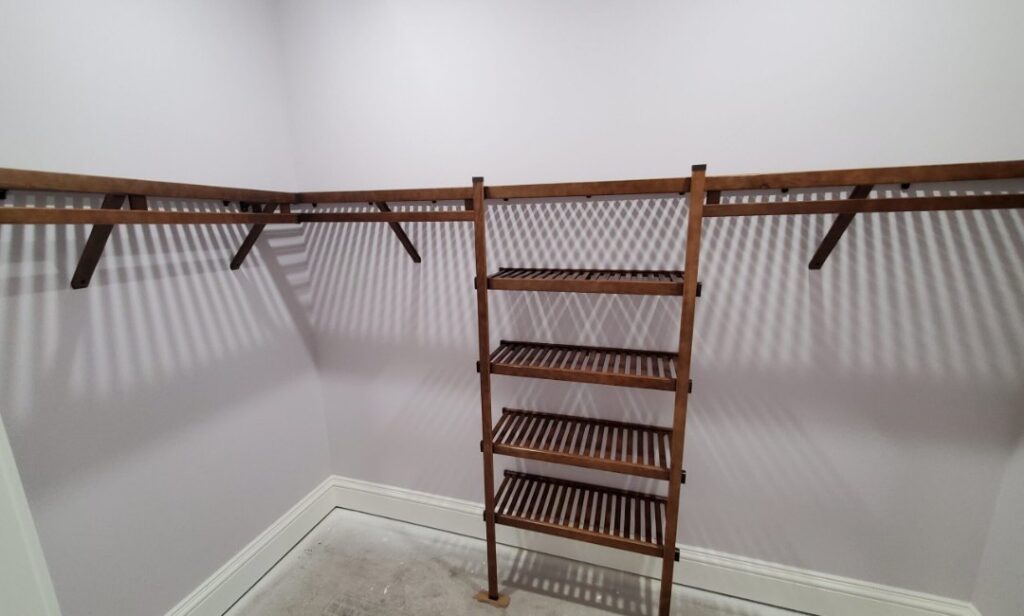
Our custom closets in Myrtle Beach are built with Cope Closet Concepts, which manufactures handcrafted closet shelving from solid, American-grown hardwood. We also offer Wellborn closet cabinetry for homeowners who want the closet to match the cabinet quality in their kitchen and bath.
Control Humidity Before You Choose Shelving
No shelving material can make up for a closet that stays damp. The EPA recommends keeping indoor humidity below 60 percent, ideally between 30 and 50 percent, to limit mold growth. A closet can run higher than the room around it because air barely moves inside it.
Field Note: Put an inexpensive digital hygrometer on a closet shelf for two weeks. If it regularly reads above 60 percent while the rest of the house is lower, airflow is the problem, and a new closet system should be paired with a ventilation fix.
Practical ways to improve airflow:
- Keep the closet on the home’s conditioned air. Closing off supply vents or leaving the door shut in a vacation home lets moisture build.
- Leave a gap under the door, or use louvered doors where privacy allows.
- Use open shelving rather than solid boxes along exterior walls so air can circulate behind stored items.
- Don’t store damp beach towels, wet suits, or pool bags in the closet. Give them a hook or a bench by the door instead.
What a Custom Closet System Solves
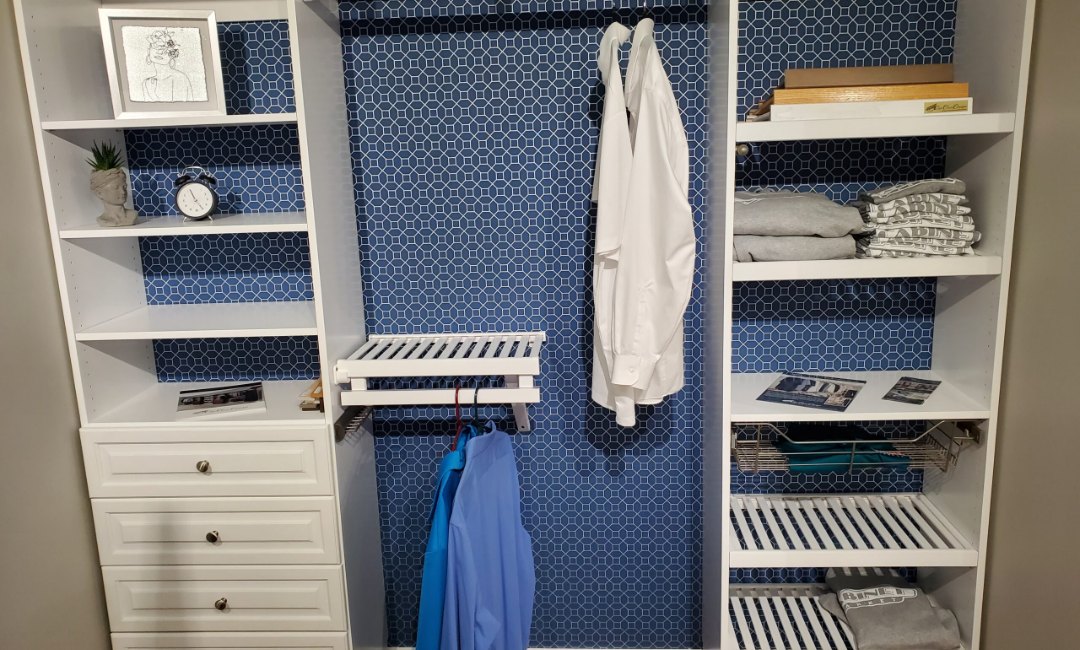
A custom system is designed around what you own and how often you use it. In coastal homes, that usually means:
- Double-hang sections for shirts and folded pants, which roughly doubles hanging capacity compared with a single rod.
- Adjustable shelves that can move as the wardrobe changes from summer to winter.
- Drawers for small items, which keep sand and dust off folded clothing.
- Low shoe shelves near the door so sandy footwear stays in one place instead of spreading through the closet.
- High seasonal storage for the wardrobe you aren’t wearing, with labeled bins so the swap takes an afternoon.
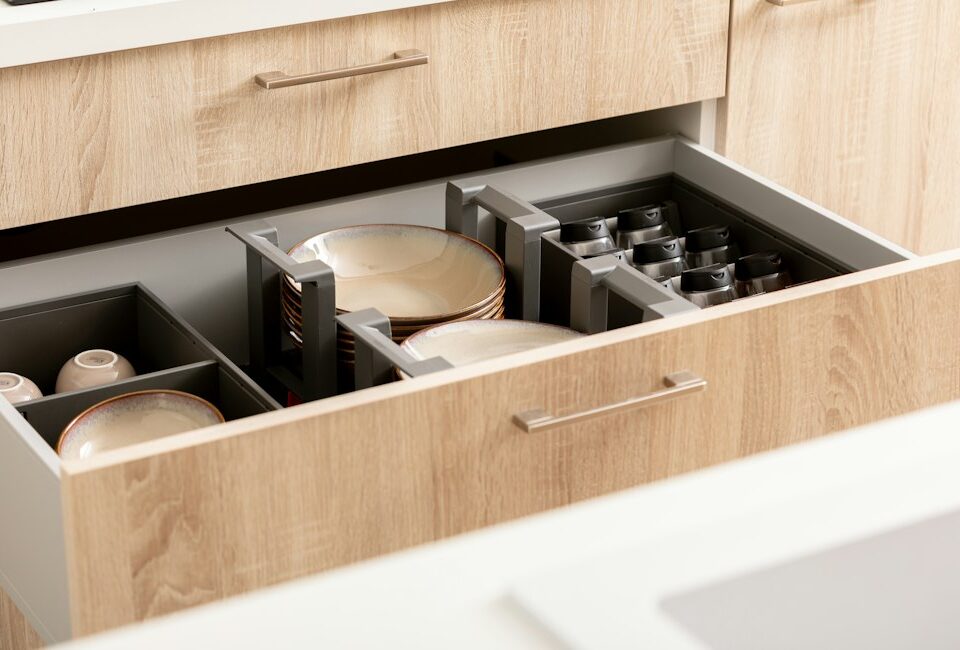
The same planning applies to pantries, laundry rooms, and mudrooms. Our cabinet storage accessories include pull-outs and dividers that work in those spaces too. To see finished work, browse our closet portfolio.
Match the Closet to Your Situation
- If you have a reach-in closet, then add a double-hang section and a shelf tower; it’s the biggest capacity gain for the space.
- If it’s a walk-in, then plan zones: long hang, double hang, drawers, shoes, and seasonal storage.
- If it’s a second home that sits closed for weeks, then favor open shelving, keep the HVAC running with humidity control, and avoid storing fabrics in sealed plastic.
- If the closet opens off a bathroom, then fix the bathroom exhaust first. Shower steam drifting into a closet adds moisture every day. Our post on bathroom ventilation explains what a properly sized fan does.
If you’re planning a primary suite update, the closet and the bath can be designed together as part of a bathroom remodel in Myrtle Beach, so materials, lighting, and storage match.
The Bottom Line on Coastal Closets
A closet that lasts near the coast depends on two things working together: humidity under control and shelving that doesn’t rust or swell. Fix the airflow, replace wire and particleboard with solid materials, and design storage around how you actually use the space. The same moisture logic applies to cabinetry, which is why we wrote a guide to the best cabinets for humid coastal climates.
Get a Closet Designed for the Coast
Bring your measurements, or a few photos of the closet you have now, and our designers will lay out a system that fits your space and your wardrobe. Request a free closet design consultation to get started.

About the Author: The Cabinet Market
The Cabinet Market is a kitchen and bath design showroom at 4551 Highway 17 Bypass South in Myrtle Beach, founded in 2015 by Mike Bond and Simon Phillips. Mike came to the business from the installation side after years of installing cabinets for local shops. Today the company is a state licensed builder and an exclusive Wellborn cabinet dealer, specializing in semi-custom cabinetry and kitchen, bath, closet, and outdoor kitchen design across the Grand Strand.