Why Coastal Closets Fail: Humidity, Salt Air, and Custom Storage in Myrtle Beach Homes
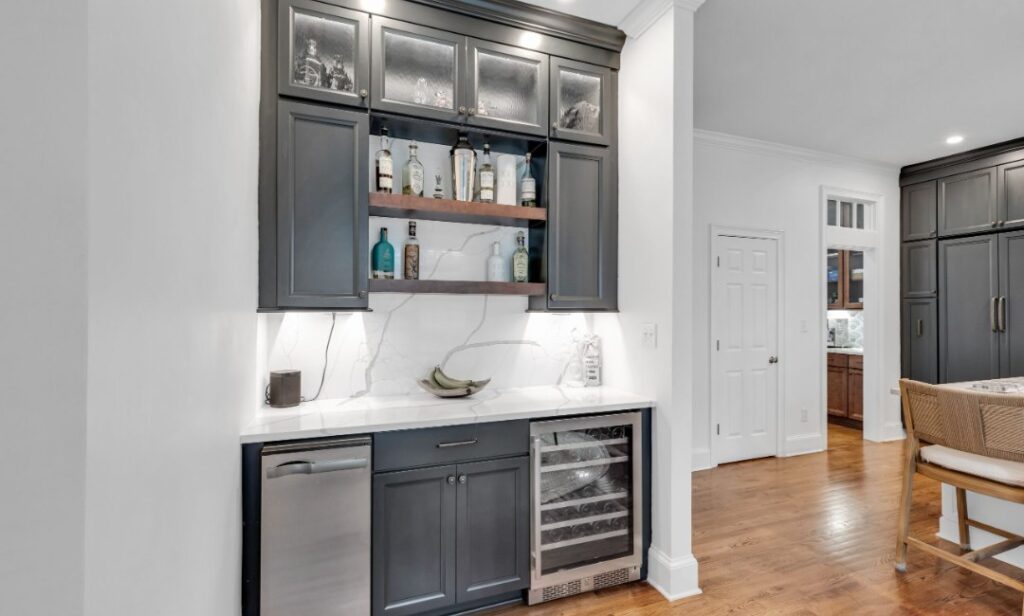
Every holiday gathering has the same traffic jam: guests drift toward the coffee maker, the wine, or the ice, and all three happen to sit in the middle of the cook’s work zone. A dedicated beverage station moves that crowd somewhere useful. At The Cabinet Market, we design coffee bars and beverage stations for Carolina Forest and Grand Strand kitchens, and they’re one of the most practical cabinet add-ons we plan.
This guide covers where to put one, how to configure the cabinets and accessories, which countertops hold up to spills, and the plumbing and electrical details that decide what’s realistic.
Move Drinks Out of the Cooking Zone
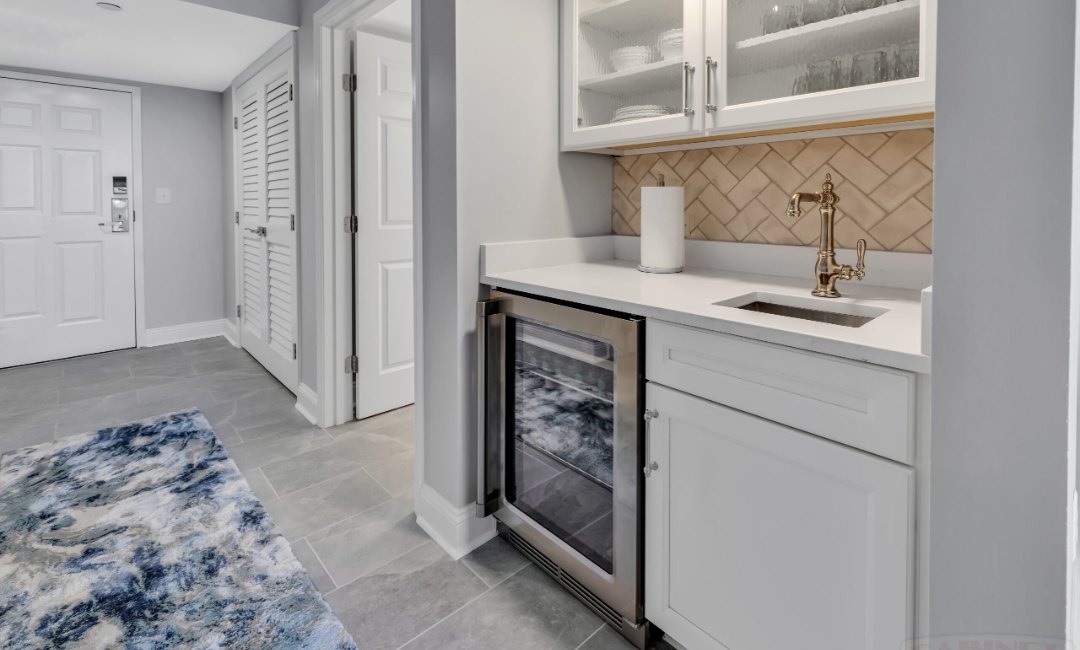
A kitchen works best when the sink, range, and refrigerator stay clear for whoever is cooking. A beverage station creates a second destination with everything guests reach for: mugs, glasses, coffee, tea, a small fridge, and a place to set a drink down. The best spot is at the edge of the kitchen, close enough to the dining or living area that guests can serve themselves without crossing the cook’s path.
| Location | Typical Footprint | Good Fit For |
|---|---|---|
| End of a perimeter cabinet run | 24 to 36 inches of counter | Kitchens with a run that faces the dining area |
| Island end facing the living room | One or two base cabinets | Open plans with a large island |
| Dining room or hallway wall | 36 to 72 inches, base plus wall cabinets | Homes with a wall that’s currently unused |
| Converted desk nook or closet | Whatever the alcove allows | Older layouts with a built-in desk nobody uses |
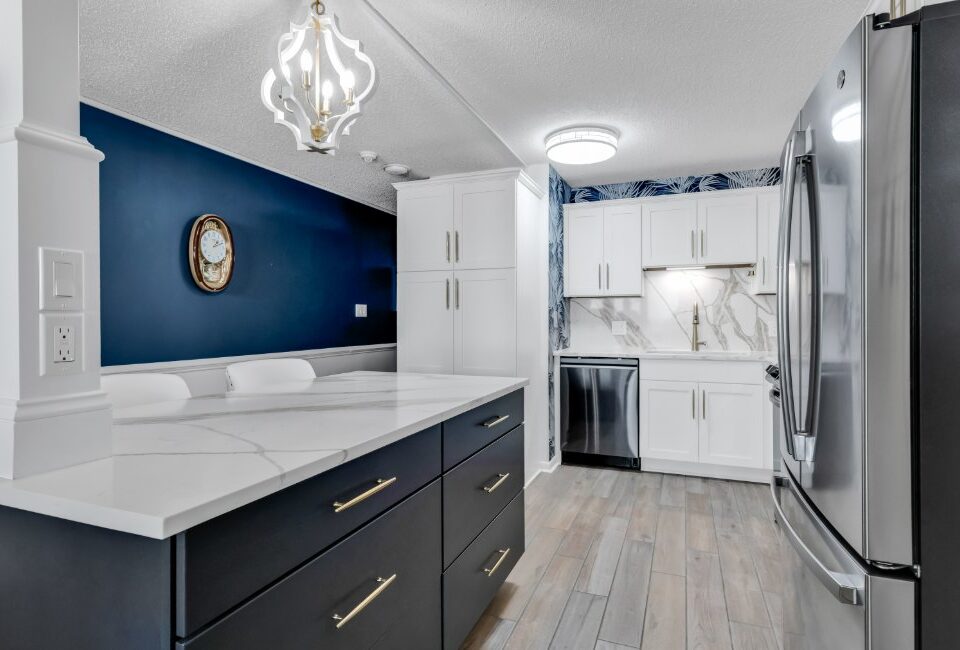
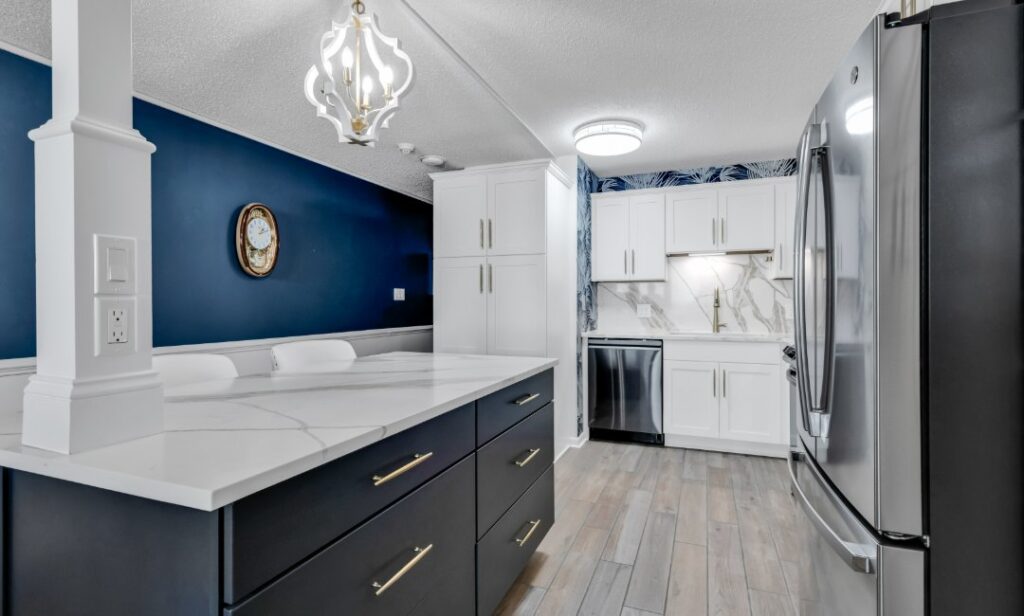
One of our Sunset Beach, NC kitchen remodels built the coffee bar into the island scheme, finishing both the island and the coffee bar in Wellborn’s Willow against a Glacier perimeter. That kind of color repeat makes the station look original to the kitchen rather than added later.
Configure Cabinets and Accessories for a Small Footprint
A beverage station doesn’t need much space if the storage is planned carefully. Standard base cabinets are 24 inches deep and wall cabinets are typically 12 inches deep, so even a 30-inch-wide station can hold more than it looks like it should. A compact plan that works well:
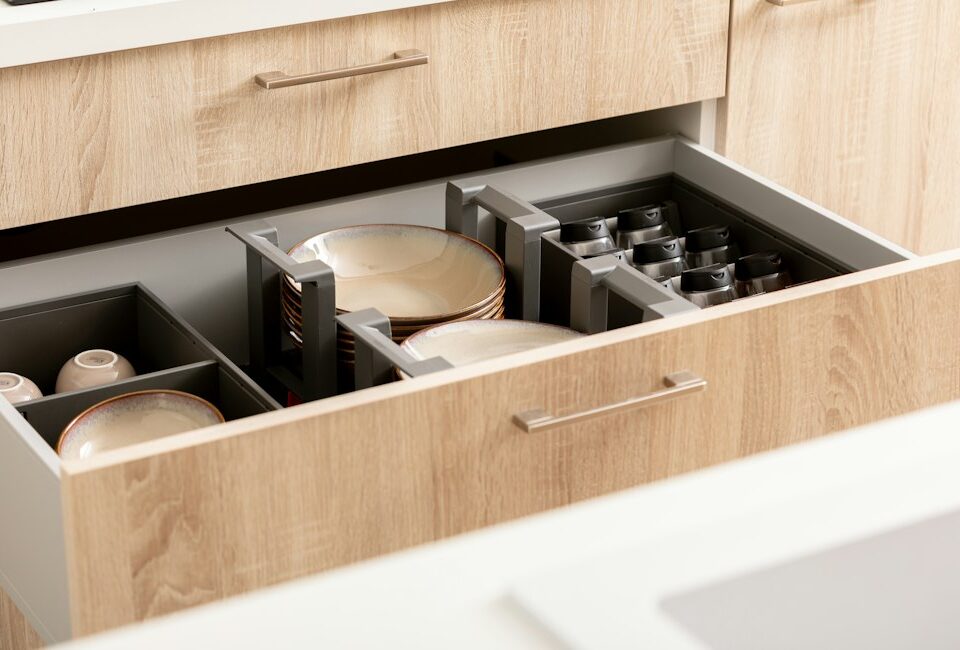
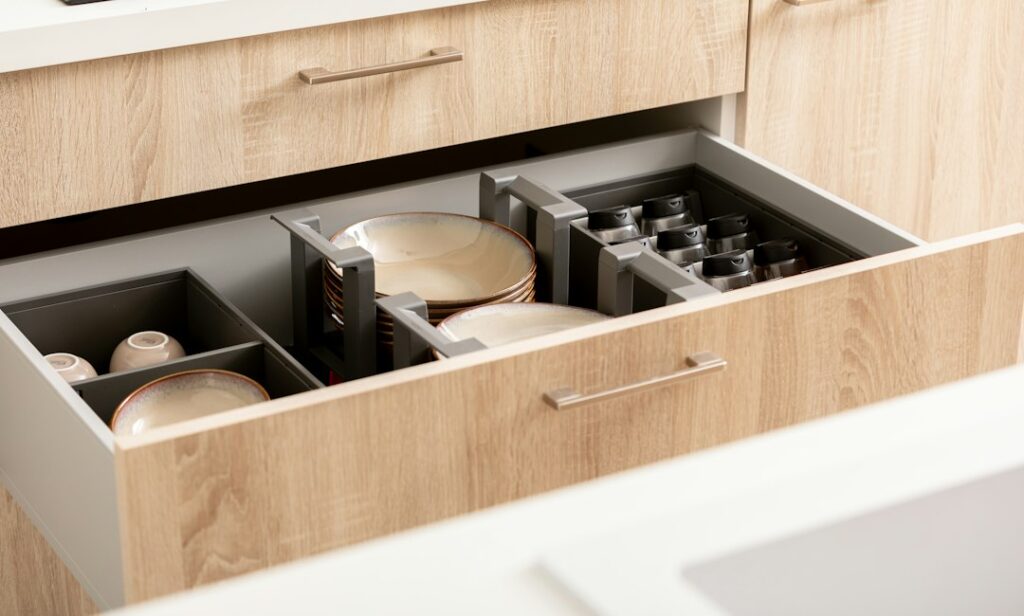
- Base: a drawer bank, with a deep drawer and dividers for mugs, pods, and tea, and a shallow top drawer for spoons and stirrers.
- Counter: coffee maker or espresso machine, grinder, and a little landing space.
- Wall: glass-front cabinets or open shelves for glassware you use often.
- Optional: an appliance garage to hide the coffee maker when the house is quiet.
Our Wellborn cabinet accessories include deep drawer dividers, cutlery dividers, and pullout shelving that suit this kind of station, and our custom kitchen cabinets come in framed and frameless lines to match an existing kitchen or start fresh. For the hide-away option, see whether your cabinet plans should include an appliance garage.
Pick a Countertop That Shrugs Off Coffee and Wine
Coffee, tea, red wine, and citrus are some of the hardest spills on a countertop. Engineered quartz is non-porous, so it resists staining without sealing. Granite performs well when it’s properly sealed. Marble is the one to think twice about: it’s calcium-based, and acidic drinks can etch a dull spot into the surface even when it’s sealed. If you love the look anyway, read our notes on marble countertop maintenance first, or compare kitchen countertop options from brands such as Cambria, Caesarstone, and Silestone.
Plan the Plumbing and Electrical Before the Cabinets
This is where beverage stations get more complicated than they look.
- Electrical. The National Electrical Code requires at least two 20-amp small-appliance circuits for kitchen countertop receptacles, and those receptacles need GFCI protection. A 20-amp, 120-volt circuit supplies 2,400 watts. Many espresso machines and electric kettles draw 1,200 to 1,500 watts each, so running two on the same circuit can trip the breaker. If the station will hold several heating appliances, plan a dedicated circuit with your electrician.
- Water. A plumbed coffee maker or refrigerator ice maker needs a water supply line with its own shutoff. A bar sink needs both supply and a drain, and the drain needs proper venting.
- Refrigeration. If a beverage fridge will be built into the cabinetry, choose a front-venting model. Units that vent from the back or sides need open air around them and can overheat when enclosed.
Use This Decision Matrix to Choose Your Station
- If you have less than 3 feet of spare wall, then build a coffee-only station: drawer base, counter, and open shelf, no plumbing.
- If you host often, then add an undercounter beverage fridge so guests aren’t opening the main refrigerator.
- If plumbing is nearby, then a bar sink makes cleanup easy; if it isn’t, keep the station close to the kitchen sink instead.
- If you want the counter clear between gatherings, then specify an appliance garage with an outlet inside it.
Pro Tip: Put the station’s outlets inside the appliance garage or at the back of the counter, not on the face of the island. It keeps cords off the walkway and away from little hands.
The Bottom Line on Beverage Stations
A well-planned beverage station takes a few feet of cabinetry and gives the cook their kitchen back during every gathering. The design work is in the details: drawers sized for mugs, a stain-resistant counter, a dedicated circuit for heating appliances, and plumbing decided early. You can see related cabinet work in our kitchen portfolio.
Design Your Entertaining Space
If you’d like a coffee bar or beverage station ready for next year’s gatherings, our designers can help you find the right spot and configuration in your Carolina Forest kitchen. Contact The Cabinet Market to design your entertaining space.

About the Author: The Cabinet Market
The Cabinet Market is a kitchen and bath design showroom at 4551 Highway 17 Bypass South in Myrtle Beach, founded in 2015 by Mike Bond and Simon Phillips. Mike came to the business from the installation side after years of installing cabinets for local shops. Today the company is a state licensed builder and an exclusive Wellborn cabinet dealer, specializing in semi-custom cabinetry and kitchen, bath, closet, and outdoor kitchen design across the Grand Strand.