Luxury Kitchen Features Worth the Investment in Myrtle Beach Homes

10 Cabinet Storage Features Every Myrtle Beach Family Wishes They Had Sooner
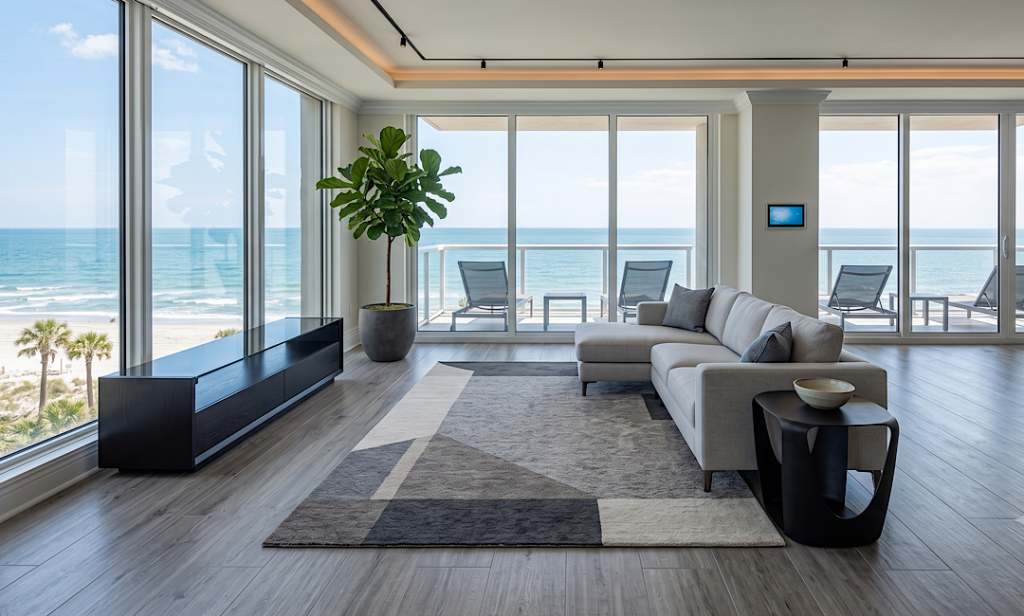
Living in Myrtle Beach means living well. It also means living with sand tracked in from the beach, salt air that works its way into every corner of the house, humidity levels that fluctuate with the seasons, and the general wear that comes from a home that is used the way coastal homes are meant to be used. The flooring that looked beautiful in a showroom in Charlotte or a design magazine from New York may not be the right flooring for a home on the Grand Strand, and the homeowners who discover that lesson after installation are the ones who wish someone had told them before they committed to a product that was not designed for the specific demands of coastal living. At The Cabinet Market, we work with Myrtle Beach homeowners on flooring decisions that are made with the coastal environment in mind from the beginning, and this guide covers the flooring options that actually perform in the conditions that Myrtle Beach homes create.
Why Coastal Flooring Decisions Are Different From Standard Flooring Decisions
The Myrtle Beach environment creates a combination of stressors that most flooring products were not engineered to handle simultaneously. Understanding what those stressors are and how they affect different flooring materials is the foundation of a flooring decision that holds up over time rather than one that requires premature replacement.
Sand is the most immediately visible coastal flooring challenge. Fine silica sand that comes in from the beach on feet, pets, and beach gear acts as a continuous abrasive on flooring surfaces that are not hard enough to resist scratching. Every footstep on a sandy floor is a micro-abrasion event, and over months and years of coastal living those events accumulate into visible surface damage on flooring materials that are not rated for the abrasion resistance that coastal use requires.
Salt air is the less visible but equally damaging coastal flooring challenge. Airborne salt particles that settle on flooring surfaces and work their way into joints, seams, and surface imperfections accelerate the degradation of materials that are not resistant to the chemical effects of salt exposure. Flooring materials with metal components, reactive wood finishes, and permeable surface treatments are particularly vulnerable to the accelerated aging that salt air exposure produces in coastal environments.
Humidity is the third and most structurally significant coastal flooring challenge. Myrtle Beach’s coastal humidity creates moisture conditions that cause wood-based flooring materials to expand, contract, cup, and warp in ways that permanently damage the floor and the installation beneath it. A flooring material that performs beautifully in a dry climate can become a maintenance problem and eventually a replacement project in the humidity conditions that Myrtle Beach homeowners live with year-round.
Best cabinets for humid coastal climates addresses how the same coastal environment factors that affect flooring decisions affect cabinetry decisions, which is useful context for homeowners who are making both decisions as part of a comprehensive remodel.
Luxury Vinyl Plank: The Coastal Flooring Champion
Luxury vinyl plank has become the dominant flooring choice for Myrtle Beach homes, and the reasons are directly connected to how well it addresses the specific challenges of coastal living rather than simply being a trending product that happens to be popular.
LVP is completely waterproof at the plank level, which means moisture from humidity, tracked-in water, pet accidents, and the general moisture exposure of coastal living does not penetrate the plank and cause the swelling, warping, and mold growth that moisture-vulnerable flooring materials experience. The waterproof core that defines quality LVP products is not simply water-resistant, meaning it can handle surface moisture temporarily. It is genuinely waterproof, meaning moisture cannot damage the structural integrity of the plank regardless of the duration of exposure.
The wear layer on quality LVP products provides the abrasion resistance that coastal sand exposure demands. A thick wear layer rated for residential or commercial use protects the decorative layer beneath it from the micro-abrasion events that sandy coastal floors experience continuously, maintaining the floor’s appearance through years of coastal living that would visibly degrade a thinner or softer surface.
LVP’s dimensional stability in response to humidity and temperature changes is one of its most practically important characteristics for Myrtle Beach applications. Unlike solid hardwood and even engineered hardwood, quality LVP products maintain their dimensions through the humidity fluctuations of coastal living without the expansion, contraction, cupping, and gapping that wood-based products experience in the same conditions.
The aesthetic range of LVP has expanded dramatically, and the wood-look LVP products available today are genuinely convincing representations of the hardwood aesthetics that Myrtle Beach homeowners want without the performance vulnerabilities that actual hardwood brings to a coastal environment. Coastal kitchen design ideas for Pawleys Island homes addresses the broader coastal design context that flooring decisions fit within for Grand Strand homeowners.
Porcelain Tile: The Premium Coastal Flooring Option
Porcelain tile is the other flooring material that coastal environment performance data consistently supports for Myrtle Beach homes, and it is the choice that delivers the highest level of durability and the most complete resistance to the coastal environment stressors that affect other flooring materials.
Porcelain tile is impervious to moisture at the tile level, completely unaffected by salt air exposure, and harder than virtually any other residential flooring surface, which makes it genuinely resistant to the abrasion that sand creates on softer flooring materials. A properly installed porcelain tile floor with appropriately specified grout and a sealed grout joint is as close to a maintenance-free coastal flooring solution as the residential market offers.
The thermal mass of porcelain tile makes it particularly comfortable in Myrtle Beach’s climate, where the tile’s ability to stay cool underfoot during warm months is a genuine comfort advantage in a coastal home that is frequently warm. Radiant heating beneath porcelain tile addresses the comfort concern during the cooler months that coastal South Carolina does experience, creating a flooring system that is comfortable year-round.
The aesthetic range of porcelain tile has expanded to include highly realistic wood-look formats, large-format stone-look slabs, and the full range of decorative options that the porcelain manufacturing technology available today produces. Large-format porcelain tiles that minimize grout joint exposure are particularly popular in Myrtle Beach luxury homes because they create a more seamless visual surface that is also easier to clean than smaller format tile with more frequent grout joints.
The primary consideration with porcelain tile for Myrtle Beach applications is the hardness underfoot that some homeowners find less comfortable than resilient flooring options, and the installation complexity that large-format tile requires to achieve a flat and level finished surface. A proper tile installation on a well-prepared substrate produces a floor that lasts decades without requiring replacement, which justifies the higher installation cost relative to resilient flooring options for homeowners who prioritize longevity.
Engineered Hardwood: The Conditional Coastal Option
Engineered hardwood occupies a specific and conditional position in the Myrtle Beach flooring market. It is not as moisture-resistant or dimensionally stable as LVP, and it is not as durable or impervious as porcelain tile. But it offers the genuine wood character, the warmth underfoot, and the authentic material presence that neither LVP nor porcelain can fully replicate, and for Myrtle Beach homeowners who want real wood flooring in a coastal home, engineered hardwood is the format that makes it possible under the right conditions.
The key distinction between engineered hardwood and solid hardwood for coastal applications is the dimensional stability that the engineered construction provides. Engineered hardwood’s cross-ply construction, where multiple layers of wood are oriented in alternating directions beneath the face veneer, resists the expansion and contraction that solid hardwood experiences in response to humidity changes. The resistance is meaningful but not absolute, and engineered hardwood in a Myrtle Beach home that is not climate-controlled consistently will still experience movement that LVP and porcelain do not.
For primary residences in Myrtle Beach that are climate-controlled year-round, engineered hardwood in a species and finish that is specified for coastal applications can perform well with proper care and maintenance. For vacation properties that may experience extended periods without climate control, or for areas of the home that are directly connected to outdoor spaces where moisture exposure is higher, LVP or porcelain is the more appropriate specification.
Calculating flooring material needs for Myrtle Beach projects addresses the planning and specification process for flooring projects in the Myrtle Beach area that homeowners should work through before committing to a material and installation scope.
What to Avoid: Flooring Materials That Struggle in Coastal Conditions
Understanding which flooring materials are not appropriate for Myrtle Beach conditions is as important as understanding which ones are, because the flooring options that look appealing in a showroom are not always the ones that perform in a coastal environment.
Solid hardwood is the flooring material that Myrtle Beach homeowners most consistently regret installing in coastal conditions. The expansion and contraction that solid hardwood experiences in response to the humidity fluctuations of coastal living produces cupping, gapping, and surface damage that is expensive to repair and eventually requires full replacement. For homeowners who want the look and feel of wood in a Myrtle Beach home, engineered hardwood under the right conditions or quality LVP is the appropriate specification.
Cork and bamboo flooring, despite their sustainable appeal, are moisture-sensitive materials that do not perform well in the humidity conditions of coastal South Carolina. Both materials are vulnerable to the moisture absorption and dimensional instability that the coastal environment creates, and both require more careful humidity management than most Myrtle Beach homeowners want to provide.
Laminate flooring, which is sometimes presented as a cost-effective alternative to LVP, is a wood-fiber core product that is fundamentally moisture-vulnerable at the core level despite having a water-resistant surface treatment. The swelling and delamination that laminate flooring experiences when moisture reaches the core makes it an inappropriate specification for Myrtle Beach applications where moisture exposure is a consistent reality rather than an occasional accident.
Flooring and Kitchen Remodel Integration
For Myrtle Beach homeowners who are remodeling the kitchen alongside a flooring project, the relationship between the flooring material and the kitchen design is a coordination opportunity that produces better visual results and better practical outcomes when it is addressed as a single design decision rather than two separate ones.
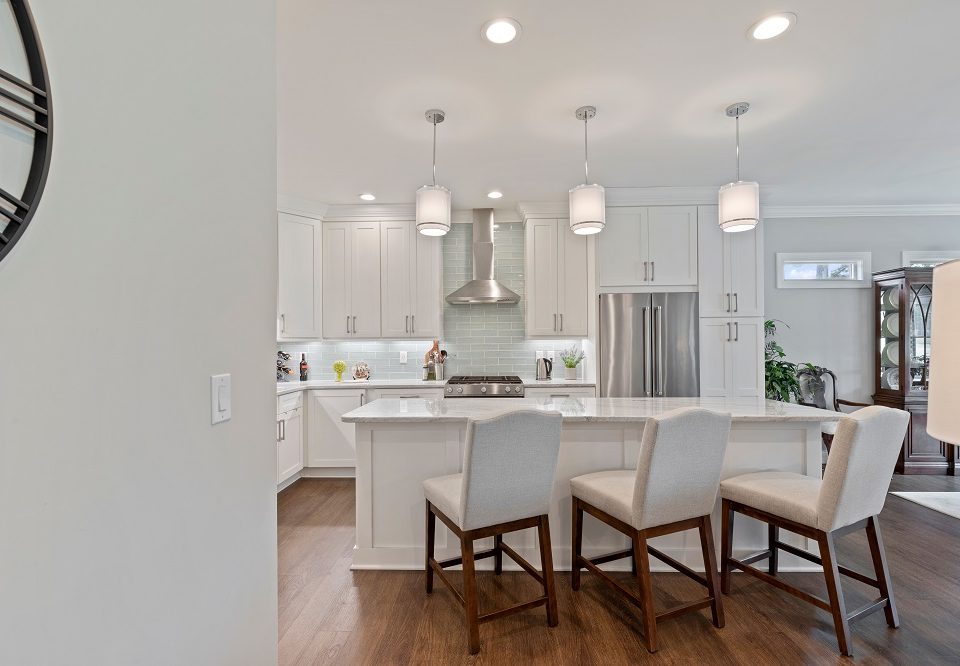
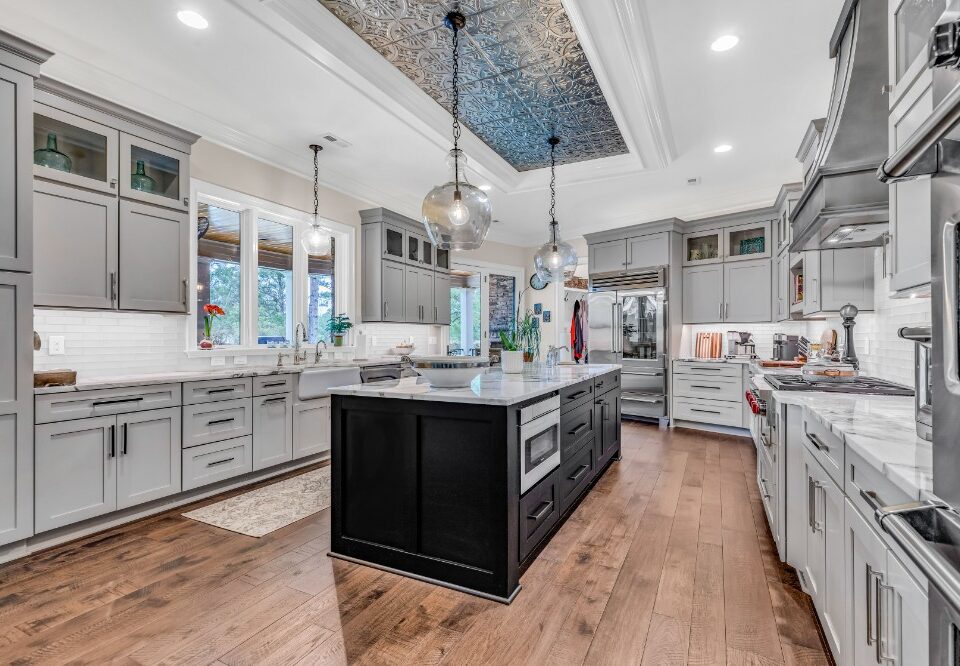
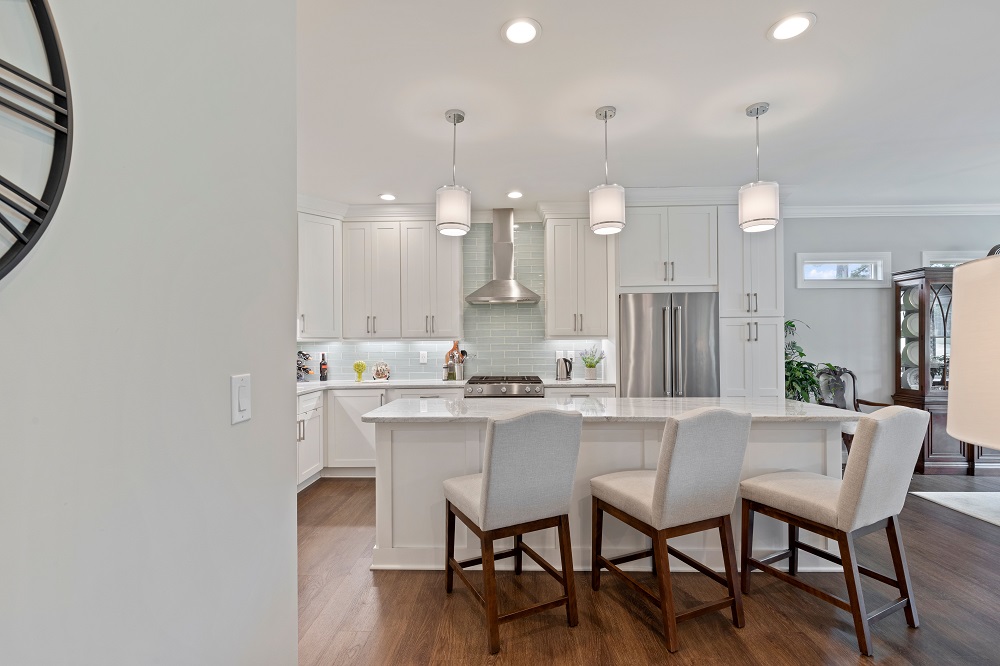
The flooring material that runs through the kitchen and into adjacent living spaces creates the visual continuity that makes an open-concept home feel cohesive and well-designed. LVP in a wood-look format that complements the cabinet finish and countertop selection creates a kitchen environment where every surface contributes to a coherent design direction. Porcelain tile in a large-format stone-look that coordinates with the countertop material creates a different but equally cohesive design environment that reads as intentional and premium.
The Cabinet Market’s design team approaches flooring selection as part of the comprehensive kitchen design process rather than as a separate decision, which produces kitchen and living space environments where the flooring, cabinetry, countertops, and hardware all contribute to a single design vision. How to plan a kitchen remodel step by step covers the comprehensive remodel planning process that flooring decisions fit within for Myrtle Beach homeowners who are approaching multiple spaces simultaneously.
Frequently Asked Questions About Flooring for Myrtle Beach Homes
What is the single best flooring option for a Myrtle Beach home?
For most Myrtle Beach applications, quality luxury vinyl plank is the flooring material that delivers the best combination of coastal performance, aesthetic range, comfort underfoot, and value. For homeowners who prioritize maximum durability and are comfortable with the harder surface, large-format porcelain tile is the premium alternative that delivers the highest level of coastal environment resistance.
Can hardwood floors work in a Myrtle Beach home?
Solid hardwood is not recommended for Myrtle Beach applications because of the dimensional instability it experiences in coastal humidity conditions. Engineered hardwood under specific conditions, specifically in climate-controlled primary residences with careful humidity management, can perform adequately in Myrtle Beach but requires more attention and maintenance than LVP or porcelain in the same environment.
What flooring is best for a Myrtle Beach vacation rental property?
Luxury vinyl plank is the overwhelming choice for Myrtle Beach vacation rental properties because of its complete waterproofness, abrasion resistance, ease of cleaning, and durability under the high-traffic conditions that rental properties experience. The combination of low maintenance requirements and strong visual appeal makes LVP the practical and aesthetic right answer for most vacation rental flooring decisions.
How does sand affect different flooring materials in a Myrtle Beach home?
Sand acts as a continuous abrasive on flooring surfaces, and the materials that resist sand-related wear best are those with the highest surface hardness. Porcelain tile is the most sand-resistant flooring surface available for residential applications. Quality LVP with a thick wear layer provides strong sand resistance for a resilient flooring option. Solid hardwood, engineered hardwood with a soft species face veneer, and laminate are more vulnerable to the surface scratching that sand creates under foot traffic.
Does The Cabinet Market handle flooring installation alongside kitchen remodels in Myrtle Beach?
Yes. The Cabinet Market integrates flooring into the comprehensive remodel design process for Myrtle Beach homeowners who want the flooring and kitchen decisions to be made and executed as a coordinated project. Contact The Cabinet Market or call (843) 293-3030 to schedule a consultation that addresses flooring alongside your kitchen or bathroom remodel.
The Right Floor for the Right Coast
Myrtle Beach flooring decisions that account for sand, salt air, and humidity from the beginning produce floors that look great and perform correctly through years of coastal living. Flooring decisions that do not account for those factors produce floors that require premature replacement and the disruption that comes with it. The Cabinet Market helps Myrtle Beach homeowners make the flooring decisions that are right for the coastal environment they actually live in. Visit our showroom to see flooring options in person alongside our cabinet and countertop selections, or call (843) 293-3030 to schedule a comprehensive design consultation today.
Ready to get started? Give us a call at (843) 293-3030 or make an appointment to visit our showroom at The Cabinet Market, 4551 Highway 17 Bypass South, Myrtle Beach, SC 29577. You can also contact us online.