Coffee Bars and Beverage Stations: The Holiday Entertaining Upgrade Worth Adding
The week before a holiday is when most kitchens get their hardest cleaning of the year, and it’s also when finishes get damaged. The wrong spray can dull a painted cabinet, strip the sheen off stained wood, or etch a marble counter in seconds. At The Cabinet Market, we design and install cabinets and countertops across the Grand Strand, and the care advice below is what we give homeowners so their finishes look the same at the next holiday as they do at this one.
Identify the Finish Before You Pick Up a Cleaner
Cleaning advice only works if you know what you’re cleaning. Most kitchen cabinets fall into three groups: painted wood or wood composite, stained wood with a clear topcoat, and laminate or thermofoil faces. Countertops vary even more, from natural stone to engineered quartz to wood. Start by checking your paperwork or asking your installer, then follow the guidance for that specific material.
Clean Painted and Stained Cabinets Without Stripping Them
For everyday cleaning, both painted and stained cabinets need the same gentle routine: a few drops of mild dish soap in warm water, a soft microfiber cloth wrung out until it’s barely damp, and a dry cloth right behind it. Apply the solution to the cloth, never directly to the cabinet, so liquid doesn’t run into joints and door edges.
| Cleaner or Tool | Painted Cabinets | Stained Cabinets | Verdict |
|---|---|---|---|
| Mild dish soap and warm water | Safe | Safe | Use for routine cleaning |
| Ammonia or bleach cleaners | Can dull or discolor | Can damage the topcoat | Avoid |
| Melamine foam sponges | Abrasive; can burnish a flat finish | Abrasive; can cut the sheen | Avoid on visible faces |
| Scouring pads and powders | Scratches | Scratches | Avoid |
| Silicone-based furniture polish | Leaves a film | Builds up and complicates future refinishing | Avoid |
Your cabinet manufacturer’s care instructions take priority over any general advice, including ours. If your kitchen cabinets came from us, ask and we’ll point you to the right guidance for that line.
Degrease Around the Range the Right Way
Grease near the range combines with dust into a sticky film that soap alone sometimes won’t lift on the first pass. Work in stages: warm soapy water first, then a second pass with fresh solution, then dry. If a degreaser is truly needed, test it on the inside of a door first and rinse with a clean damp cloth afterward. Clean the range hood filter too. Many metal mesh filters can go in the dishwasher, but check the hood manual first. Our post on choosing the right range hood covers why good capture keeps cabinets cleaner in the first place.
Match Countertop Care to the Material
| Material | Daily Cleaning | Avoid | Sealing |
|---|---|---|---|
| Granite | pH-neutral stone cleaner or mild soap | Vinegar, lemon, bleach, ammonia | Needed; frequency depends on the stone and sealer |
| Quartz (Cambria, Caesarstone, HanStone, Silestone) | Mild soap and water | Oven cleaners and harsh high-alkaline products; direct high heat | Not needed; the surface is non-porous |
| Marble | pH-neutral stone cleaner | Any acid: citrus, vinegar, wine, tomato | Helps with stains, but does not prevent etching |
| Dekton | Mild soap and water | Abrasive pads on polished finishes | Not needed |
| GEOS recycled glass | Mild soap and water | Abrasives | Not required, per the manufacturer |
| Laminate (Wilsonart) | Mild soap and water | Abrasive cleaners, hot pans, cutting directly on the surface | Not applicable |
| Butcher block (John Boos) | Wipe, then dry promptly | Soaking or standing water | Oil regularly with food-grade mineral oil |
Field Note: The Granite Water Test. Pour a small puddle of water on a few spots, including near the sink and range. If the stone darkens within roughly 10 to 15 minutes, it’s absorbing and due for sealing. If the water beads and the stone stays the same color, the seal is still working.
For deeper comparisons, see quartz versus granite for coastal living and what makes Dekton countertops different.
Learn the Difference Between a Stain and an Etch
Homeowners often call any mark on stone a stain, but the fix depends on what actually happened.
- A stain is darker than the surrounding stone. Something (usually oil, coffee, or wine) soaked into the pores. It can often be drawn out with a poultice made for stone.
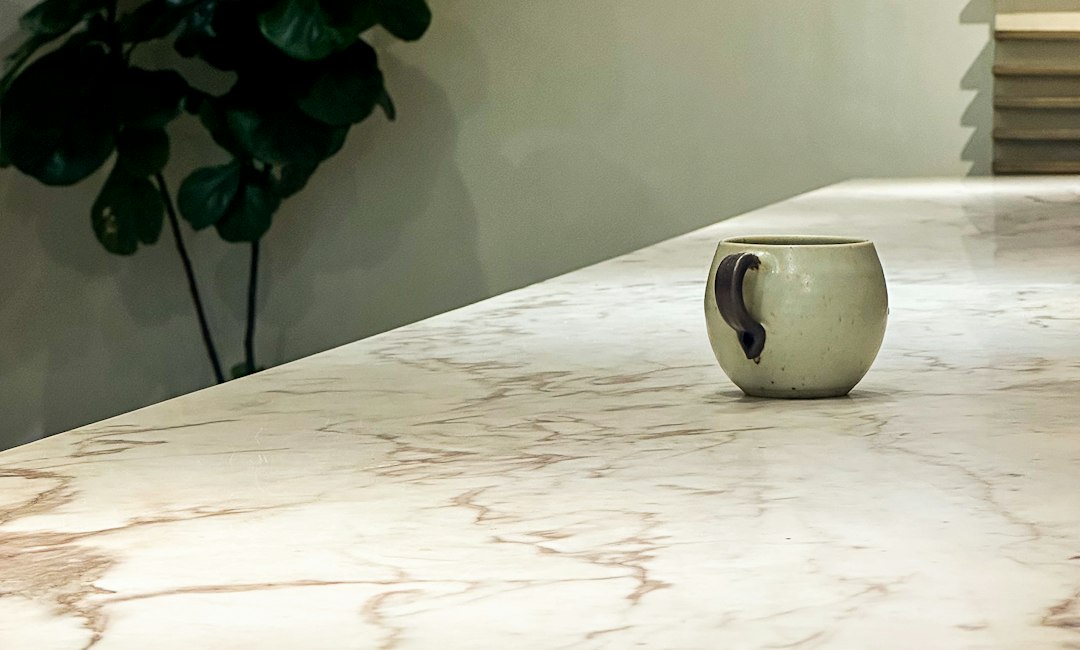
- An etch is a dull or lighter spot that you can sometimes feel. Acid reacted with calcium-based stone, mostly marble, and removed some of the polish. Cleaning won’t fix it; it needs honing or polishing. Our guide to marble countertop maintenance explains why.
Know When Cleaning Won’t Fix It
Some wear is past the point of cleaning. These are the signs we look for during an assessment:
- Swollen or soft door edges near the sink or dishwasher.
- Finish worn through to bare wood on frequently used doors and drawer fronts.
- Peeling laminate or thermofoil.
- Cracks, deep chips, or widespread etching in the countertop.
If the cabinet boxes are solid, professional cabinet painting or cabinet refacing can renew the look without a full replacement. Damaged tops can be replaced on their own; our countertop replacement options cover quartz, granite, marble, and more.
The Bottom Line on Cabinet and Countertop Care
Mild soap, a damp microfiber cloth, and a dry cloth handle almost all routine cleaning on cabinets and on most countertops. Skip ammonia, bleach, abrasives, and acids, seal granite when the water test says so, and keep acids off marble entirely. Those habits do more to protect a kitchen than any specialty product.
Not Sure if It’s Cleanable or Replaceable?
We’ll look at your cabinets and countertops and tell you plainly whether care, refinishing, or replacement makes the most sense. Get a free cabinet and countertop assessment before your guests arrive.

About the Author: The Cabinet Market
The Cabinet Market is a kitchen and bath design showroom at 4551 Highway 17 Bypass South in Myrtle Beach, founded in 2015 by Mike Bond and Simon Phillips. Mike came to the business from the installation side after years of installing cabinets for local shops. Today the company is a state licensed builder and an exclusive Wellborn cabinet dealer, specializing in semi-custom cabinetry and kitchen, bath, closet, and outdoor kitchen design across the Grand Strand.